PPWR: what the new EU packaging rules mean for your business
TL;DR
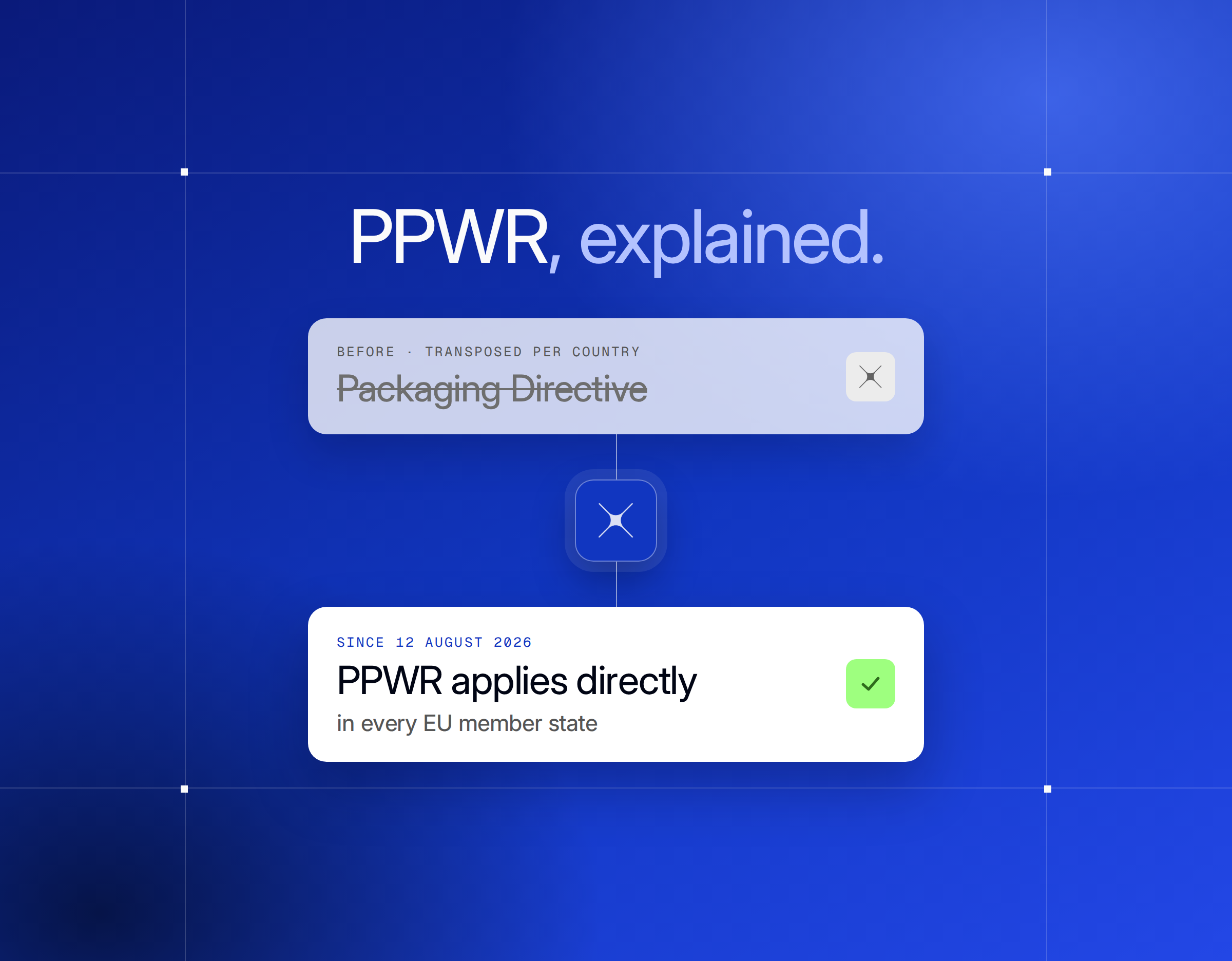
- EU's PPWR packaging rules apply directly in all member states from 12 August 2026, with no national transposition needed
- Affects every business placing packaging on the EU market, regardless of size
- Five obligations kick in immediately: conformity declaration, stricter PFAS limits, no unnecessary empty space, substantiated green claims, and harmonized producer responsibility
- Further requirements follow through 2030, including recyclability criteria, recycled content minimums, and binding reuse targets
- Starting with a packaging audit now helps spread investment and avoid last-minute scrambling once enforcement begins
Introduction
From 12 August 2026, the Packaging and Packaging Waste Regulation, or PPWR, applies directly in every EU member state. It replaces the old packaging directive and covers any company that places packaging on the European market, from a multinational to a one-person shop. No transposition into national law this time: the rules take effect at once, everywhere.
The PPWR covers the full life of a package: design, production, use, collection and processing. In practice, you need to show your packaging is no bigger or heavier than necessary, and the requirements for recyclability, reusability and recycled content get stricter. Some single-use packaging formats disappear over time, and several sectors get hard reuse targets.
That means extra work and investment. But companies that switch to circular packaging now build an edge in a market where sustainability weighs more and more in purchasing decisions.
What changes from 12 August 2026
Five obligations take effect immediately.
Declaration of conformity and technical documentation. Every package needs a declaration of conformity, backed by technical documentation, and must be traceable back to the manufacturer. The requirements for that declaration sit in Annex VIII of the regulation, page 108.
Tighter limits on harmful substances. Food-contact packaging gets strict limits on PFAS, with no transition period. Non-compliant packaging can't go on the market from day one.
No unnecessary empty space. A box full of air costs material and shipping capacity. The PPWR requires you to cut that space down.
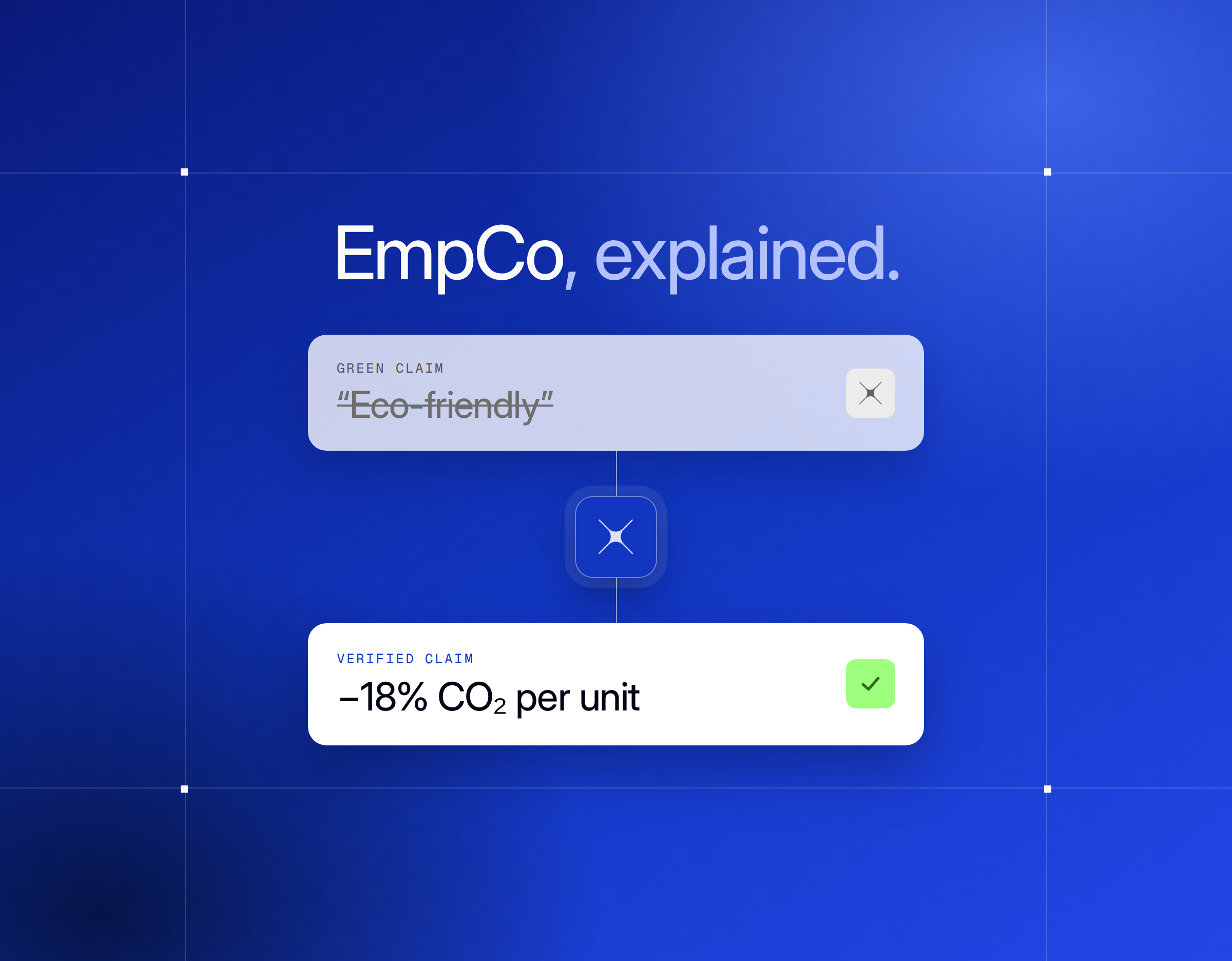
Stricter rules on environmental claims. If you talk about how sustainable your packaging is, that claim needs to hold up under the EmpCo directive (Empowering Consumers for the Green Transition). A vague "eco-friendly packaging" label no longer cuts it.
One EU-wide definition of producer responsibility. Extended producer responsibility (EPR) gets harmonised, so the same rules apply in every member state.
And that's only the start
The obligations above apply now, but further requirements phase in through 2030 and beyond.
By 2030, every package must meet the EU's recyclability criteria. Anyone still designing packaging without "design for recycling" in mind is building a problem for later. Certain plastic packaging also gets minimum shares of recycled plastic (post-consumer recycled, or PCR), phased in from 2030 as well. And several packaging categories get binding reuse targets, which means checking where a return system works alongside, or instead of, single-use packaging.
Redesigning packaging and adjusting production lines easily takes a few years. Starting now spreads out the investment and avoids a last-minute scramble.
Where to start
A good starting point is an audit of your current packaging portfolio. That usually leads to the same set of questions:
- Is this package bigger or more complex than it needs to be?
- Can material use come down without losing protection?
- Is the design ready for recycling?
- Are the technical documentation and declaration of conformity in place?
- Are you already talking to suppliers and customers about circular alternatives?
Answer these now, and the PPWR stops being a fire to put out. It becomes something already under control by the time the checks start.
Frequently asked questions
Does the PPWR apply to SMEs too? Yes. Company size doesn't matter. Anyone placing packaging on the EU market falls under it.
Is this just a cost? Not necessarily. Companies investing now in sustainable, recyclable and reusable packaging also strengthen their position with customers who are under their own pressure to clean up their supply chain.
Where do I find the exact requirements for the declaration of conformity? In Annex VIII of the PPWR, page 108 of the official text on EUR-Lex.
Not sure what PPWR means for your business? Book a free call with our experts. We're here to help.