A mass of financial data goes structurally underused
Companies are sitting on a mass of financial data, packaged as sustainability data, but they fail to use its strategic value. Sustainability is still sold too often as a compliance exercise. As a result, companies miss the financial insights that have been sitting in front of them for years.
The world has become uninsurable
There was a time when you could buy your way out of risk. A solid insurance policy, a thorough supplier audit, a crisis plan in the drawer. That time is over.
MANY COMPANIES STILL OPERATE REACTIVELY. THEY SOLVE PROBLEMS AS THEY ARISE.
Today the world changes faster than most companies can adjust their quarterly figures. Tariff wars launched with a single tweet, supply chains that shift over a single weekend, energy prices that double in three months and halve again in six. The Strait of Hormuz blocked, putting the global oil supply under pressure.
And yet many companies still operate reactively. They solve problems as they arise. That is not a strategy.
Prepared companies perform structurally better
In late 2025, McKinsey surveyed 152 finance leaders across 22 countries in its CFO Pulse Survey. Unsurprisingly, geopolitical instability tops their list of risks. More striking is what they name as their biggest gap: reliable, timely information on what those risks actually mean for their own company.
That is no coincidence. Companies that come through a crisis better know their cost structure better, understand their value chain and know which levers they can pull when the market turns. In short, they have better information about themselves. The information that creates this edge is something many companies already have in house, often without realising it.
The pieces are already there
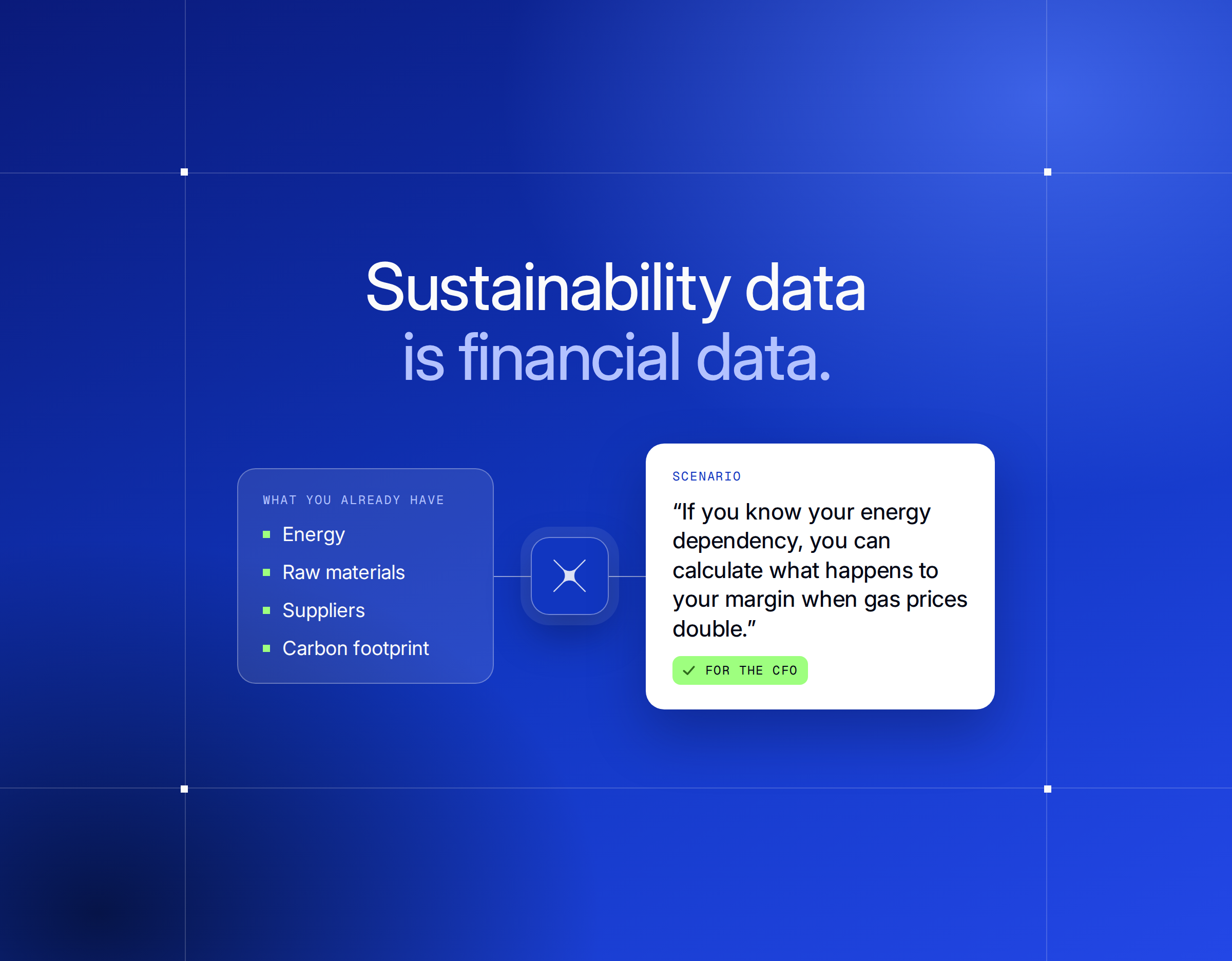
Anyone who has taken sustainability seriously in recent years has gathered data on their energy use, raw materials, suppliers, waste streams, mobility and carbon footprint, right across the value chain. Often that information sits in a report gathering dust in a cupboard, sometimes in an Excel file that gets updated once a year for an annual report.
In effect, that is an X-ray of the company. A company that knows its energy dependency can calculate what happens to its margin if gas prices double. A company that has mapped its suppliers knows what a blockade in the Strait of Hormuz means for its production. A company that understands its material supply can anticipate raw-material shortages.
Sustainability data thus turns out to be the ideal input for financial scenario planning. That pays off, because companies that can gauge risk dare to do more. They decide faster on a new market, an acquisition or a change of supplier, because they know the impact before they take the leap. Those that know the least about themselves innovate less and run more risk.
The pitfalls of idealism and minimalism
In practice, two types of company miss the boat.
The first type approaches sustainability idealistically, with big ambitions, polished reports and a dedicated team, but without any link to financial reality. The CFO sees it as a cost, the board regards it as reputation management.
The moment margins come under pressure, the sustainability budget is the first to be cut, as became clear after the regulatory relaxations last year.
The second type does the strict minimum and limits itself to what is legally required. They collect sustainability data to report it, not to act on it, and so miss all the strategic value held in that data. Both lose out. But the cause is the same.
It comes down to the definition. Stanford University defines 'ESG' as a set of external factors, from climate risk to geopolitical pressure, whose growing relevance feeds directly into a company's financial performance. Not as an extra obligation, but as part of sound business judgement.
They affect profitability, risk profile and capital allocation. What company would not want to concern itself with that? The question answers itself, at least if you define sustainability that way. And that is where the problem lies.
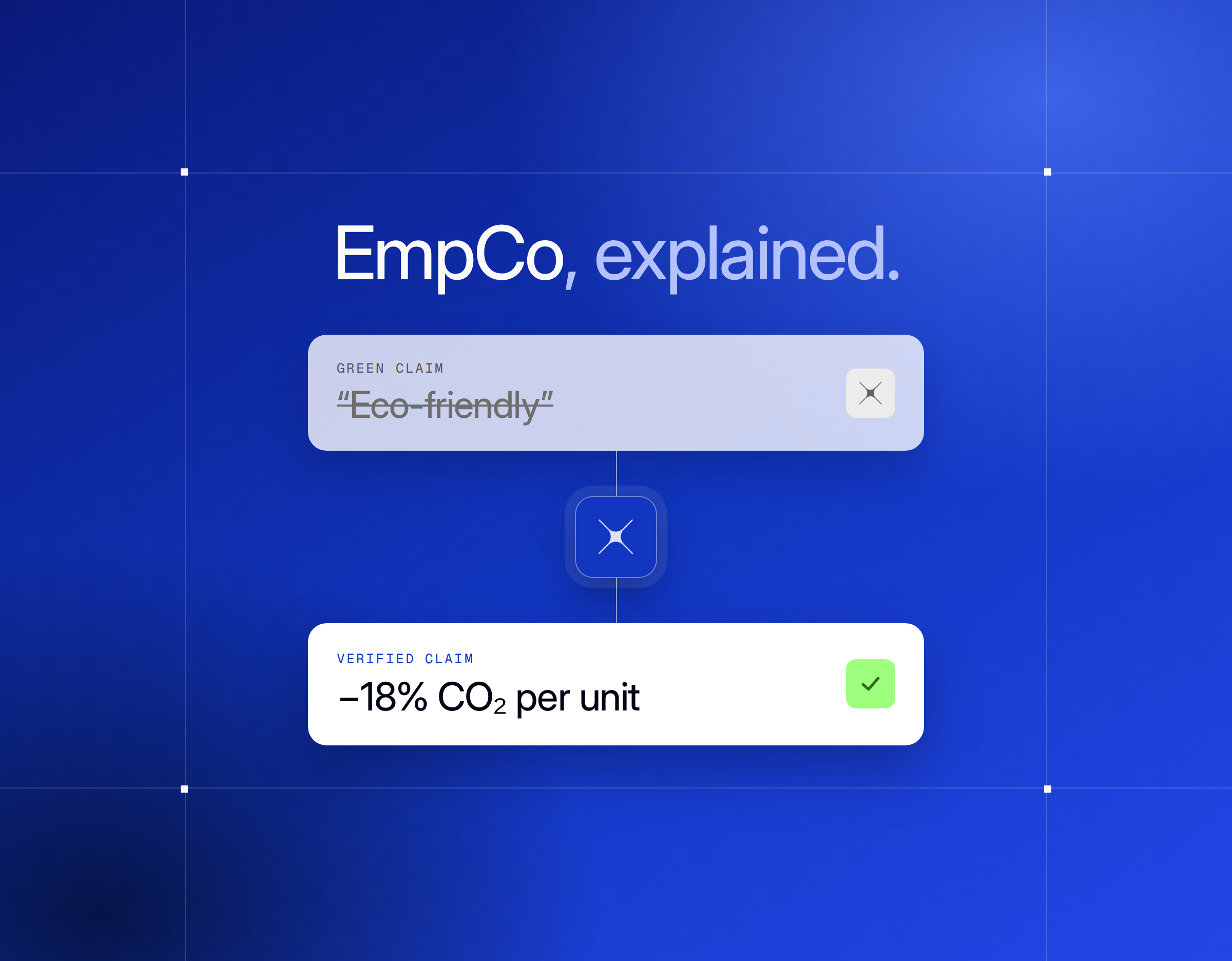
For years, sustainability was sold the wrong way. As a compliance exercise, inflated by consultants riding the wave of regulation. And so, when that regulation eases, sustainability gets cut away along with all the insights it holds. Because no one ever took the trouble to translate that data into financial terms.
The CFO is the new sustainability manager
The world is not becoming any more manageable. Tariff conflicts, climate pressure, the energy transition and geopolitical instability are all being normalised. Further disruptions will follow.
The companies that come through it best are the ones that know themselves best, not the ones with the thickest crisis plan. The ones that fully grasp their cost structure, value chains and dependencies. The ones that can translate the data into concrete scenarios: if X happens, we do Y.
That knowledge is already on the table, in the data companies have gathered over recent years under the heading of 'sustainability'. The only thing missing is someone to turn it into a financial story. That is a job for the CFO. The companies that will make the difference in the coming years are those that see sustainability as a financial story.